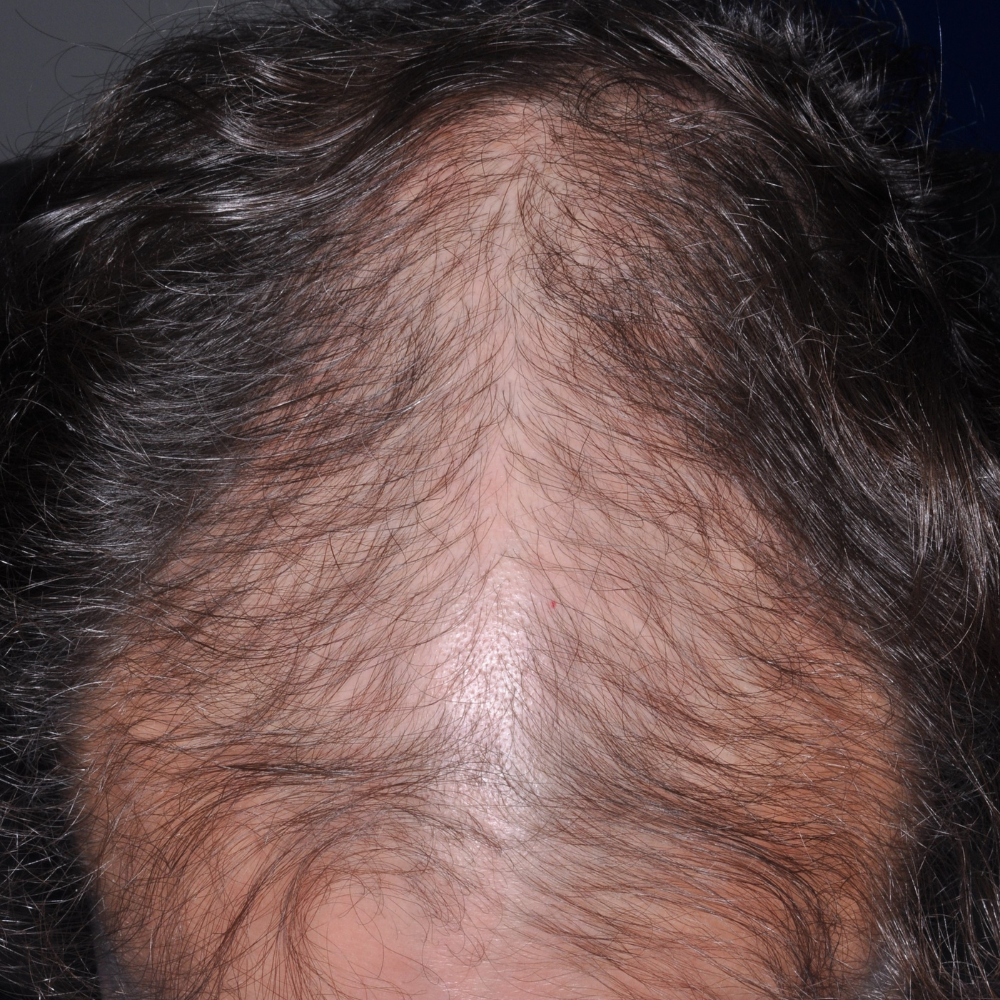
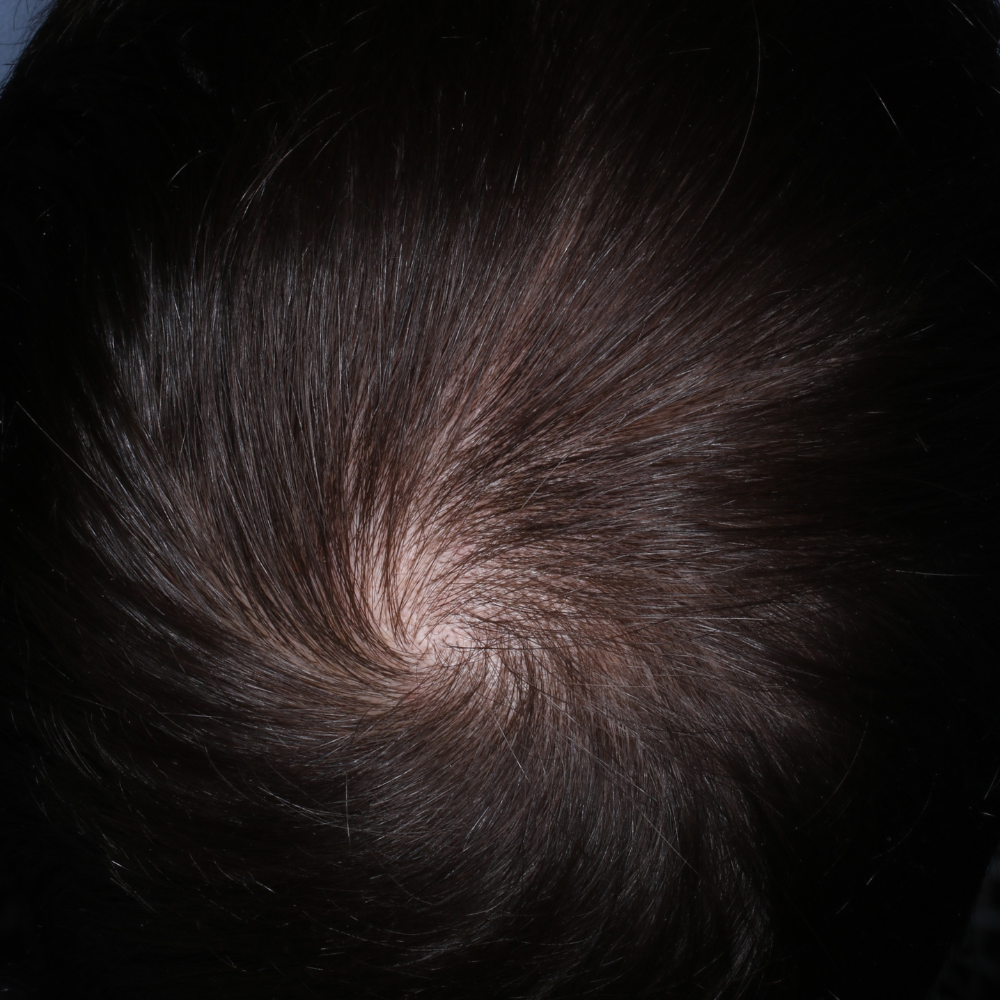
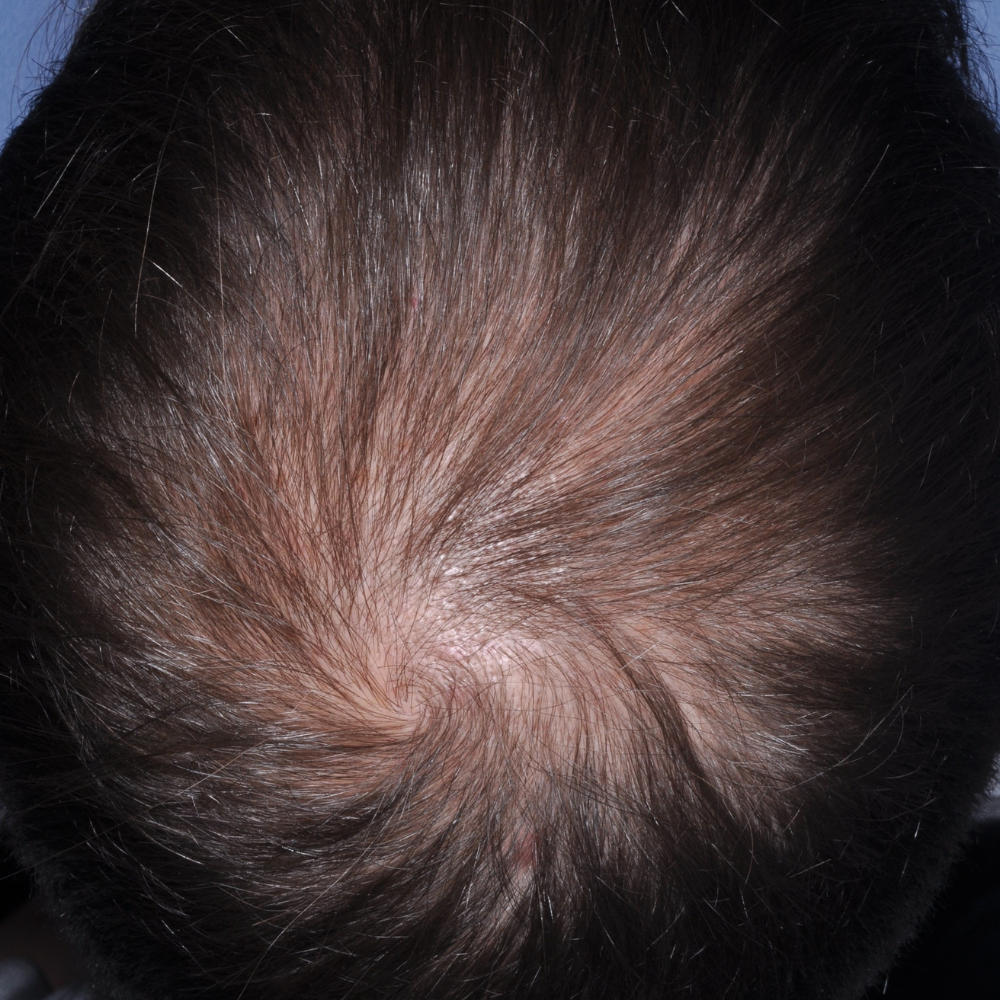
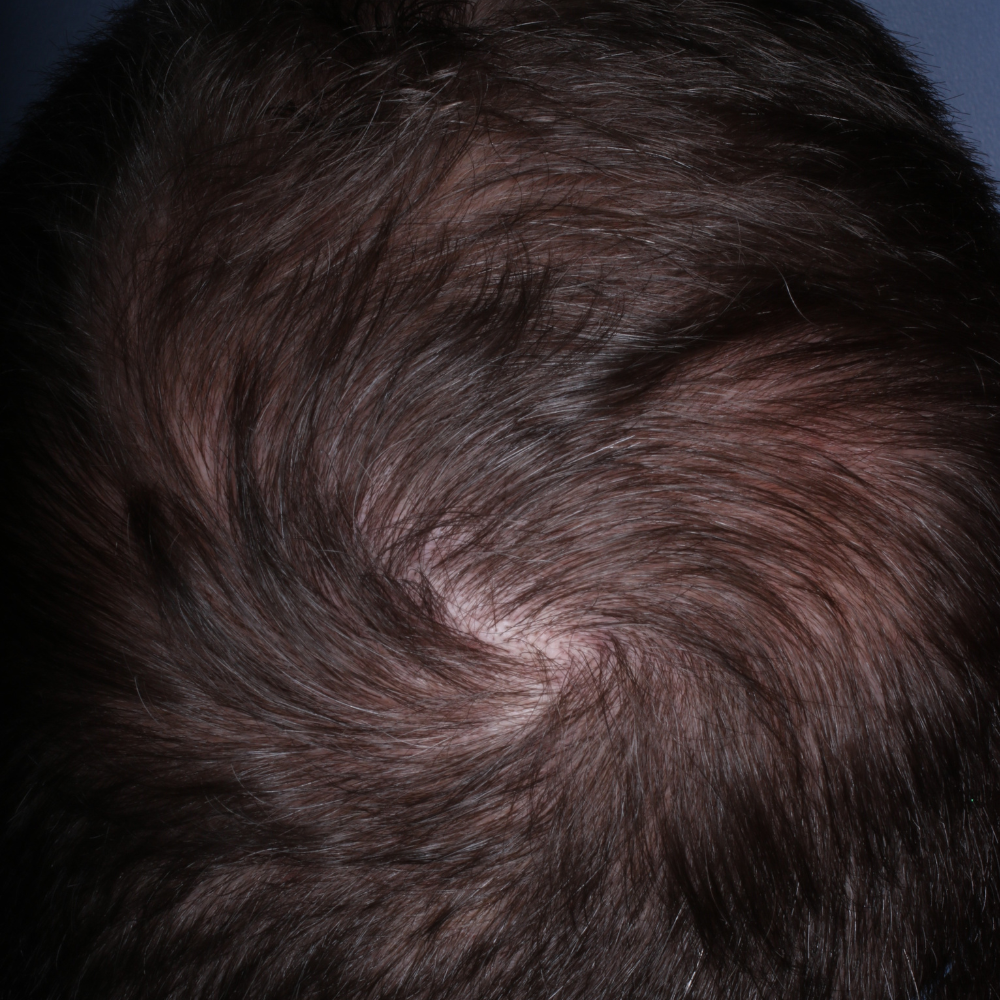
Traction alopecia is a type of hair loss caused by repetitive pulling forces which result in
mechanical damage of hair follicles. Traction alopecia can be reversed, especially in its early stages, by stopping the damaging hairstyles and practices which cause hair loss. Long-term repetitive
pulling forces on hair fibres can lead to permanent hair loss.
What causes traction alopecia?
The commonest cause of traction alopecia is tight hairstyles. The pattern of hair loss will
depend on the type of hairstyle and scalp area(s) where the tension is greatest. Usually, the
longer hairs at the edge of the scalp are most affected. Often, shorter hairs are not caught in
tight hairstyles and are still present within patches of traction alopecia.
Hairstyles often associated with traction alopecia are tight ponytails, tight buns, weaves and
hair extensions. Tight braids (such as cornrows and dreadlocks) are also common causes of
traction alopecia. The risk of traction alopecia is greater if these hairstyles are combined
with chemicals applied to the hair e.g., chemical relaxers. Hair clips and tight head scarves
have also been associated with traction alopecia. Excessively long hair may contribute to
traction alopecia due to the weight of the hair.
What are the symptoms and signs of traction alopecia?
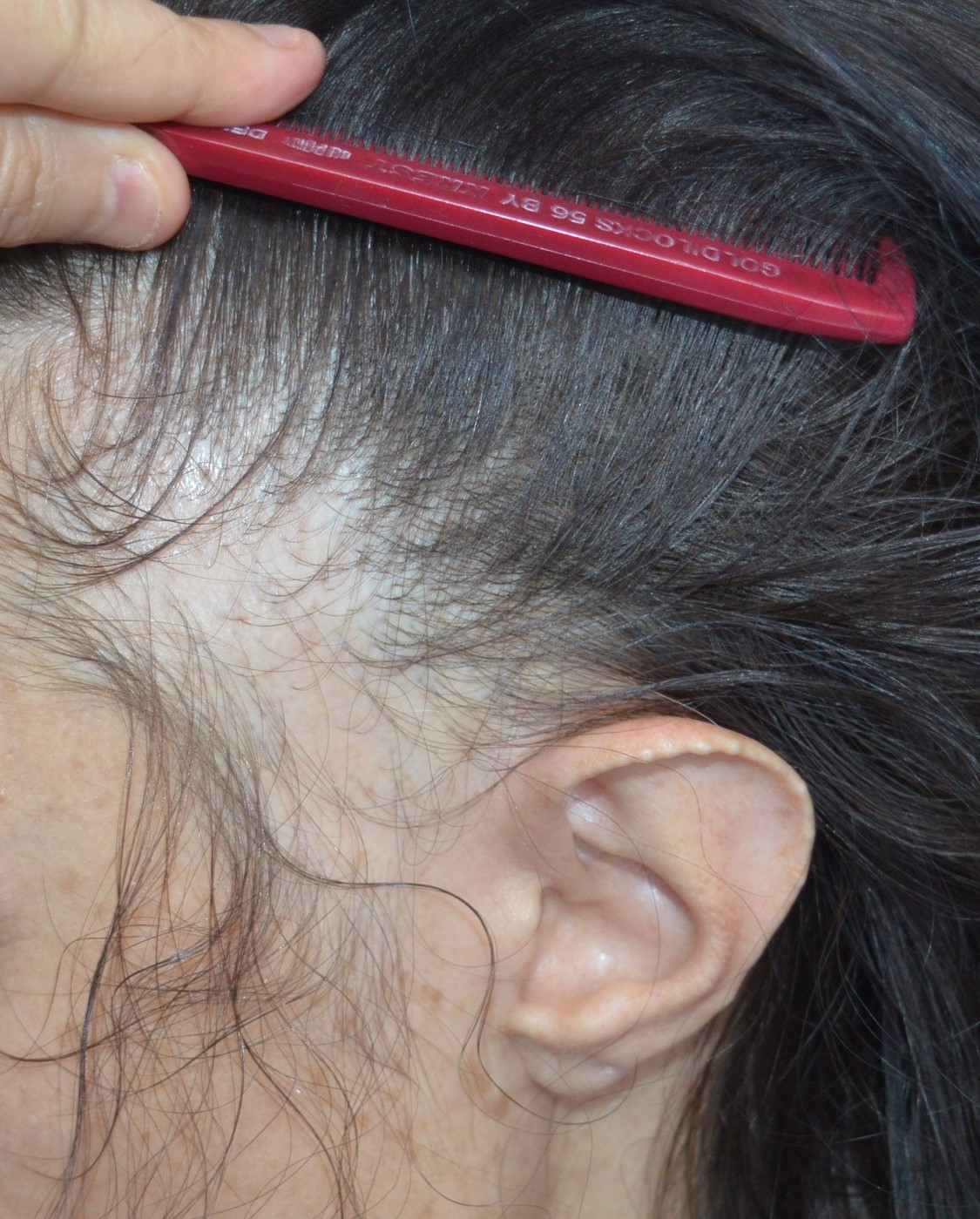
Some patients may experience itching, pain or increased flaking of the scalp. Traction alopecia can affect hair from any part of the scalp. Often hair loss is seen at the front, sides and back of the scalp. Smaller hairs within the patch are often unaffected and a rim of slightly longer hairs (called the “fringe sign”) may be also be seen at the edge of the patch furthest from the tight hairstyle.
Within patches of hair loss, the skin usually looks normal. In longstanding cases, traction alopecia may result in permanent hair loss.
How is traction alopecia diagnosed?
Traction alopecia is a clinical diagnosis; in other words, it can be recognised by its
characteristic appearance and distribution.
How is traction alopecia treated?
The treatment of traction alopecia may include:
Stopping hairstyling practice that induces traction