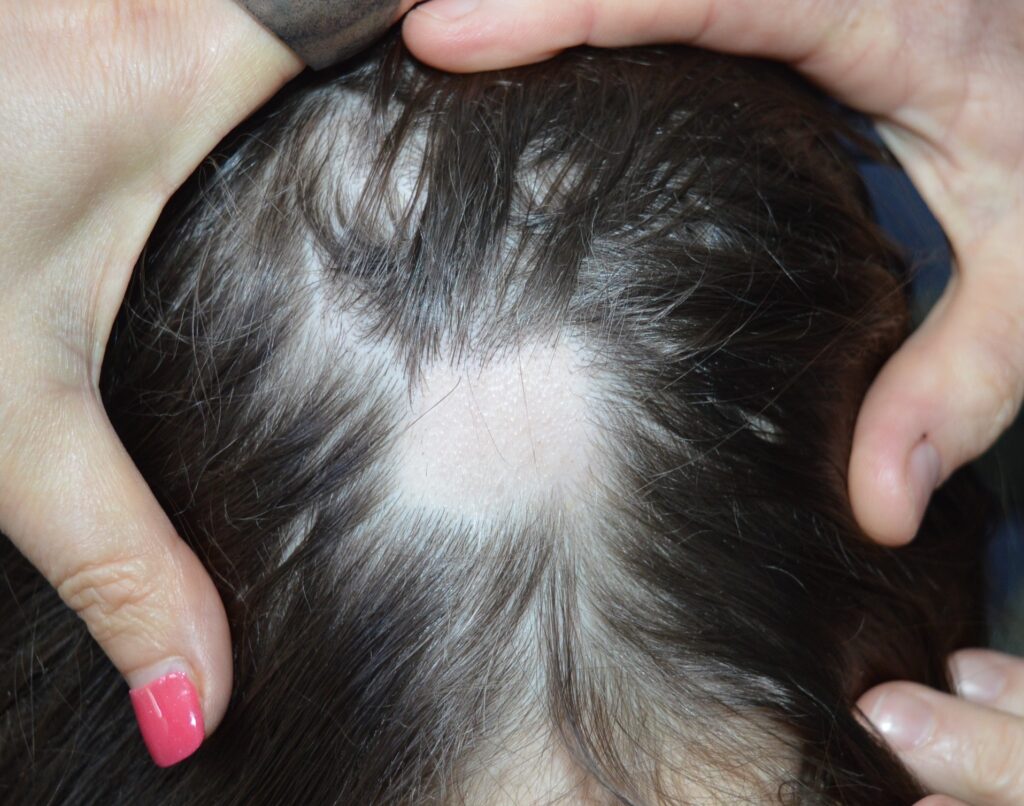
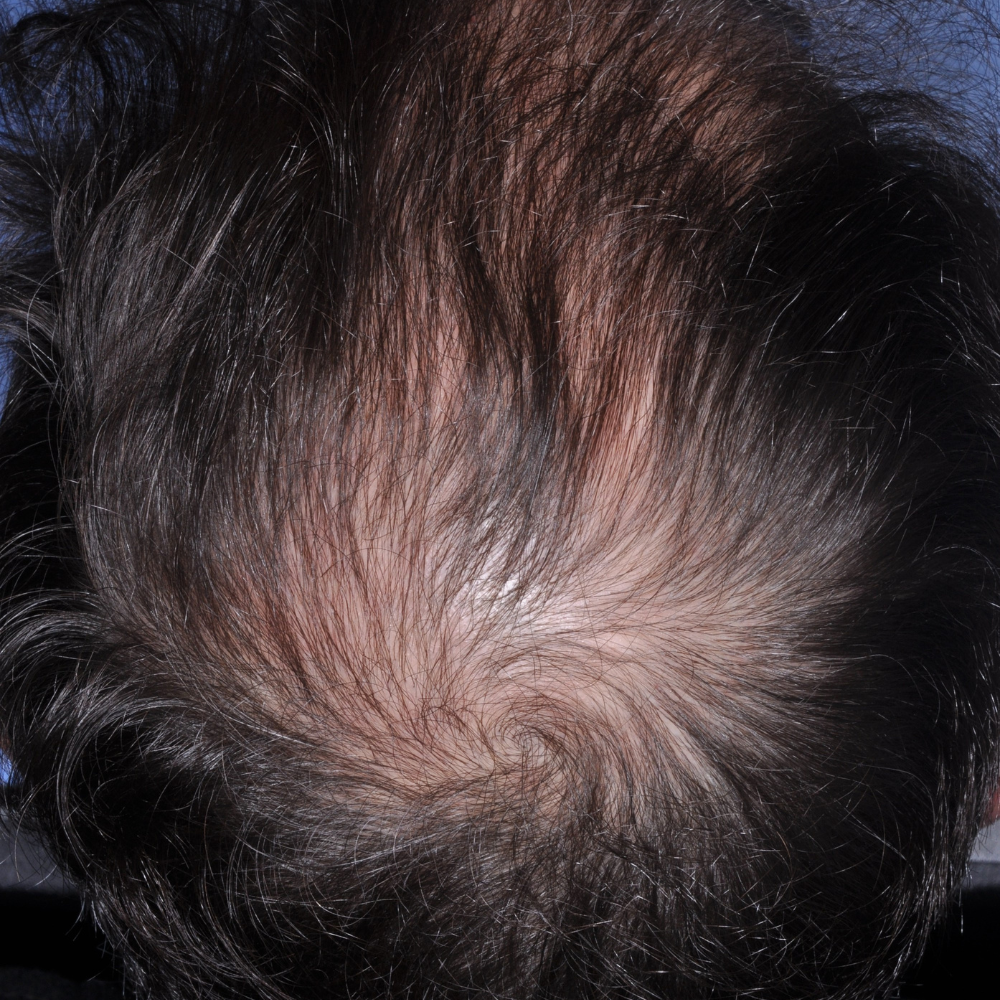
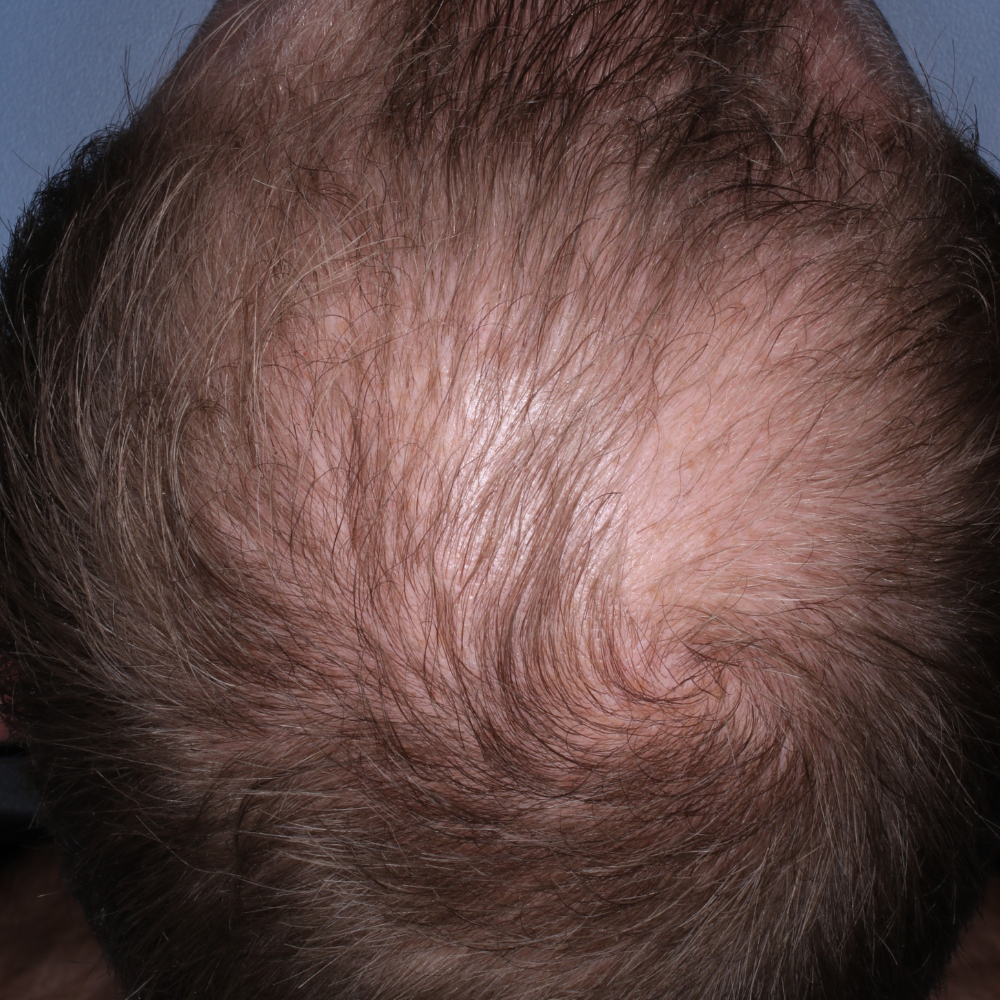
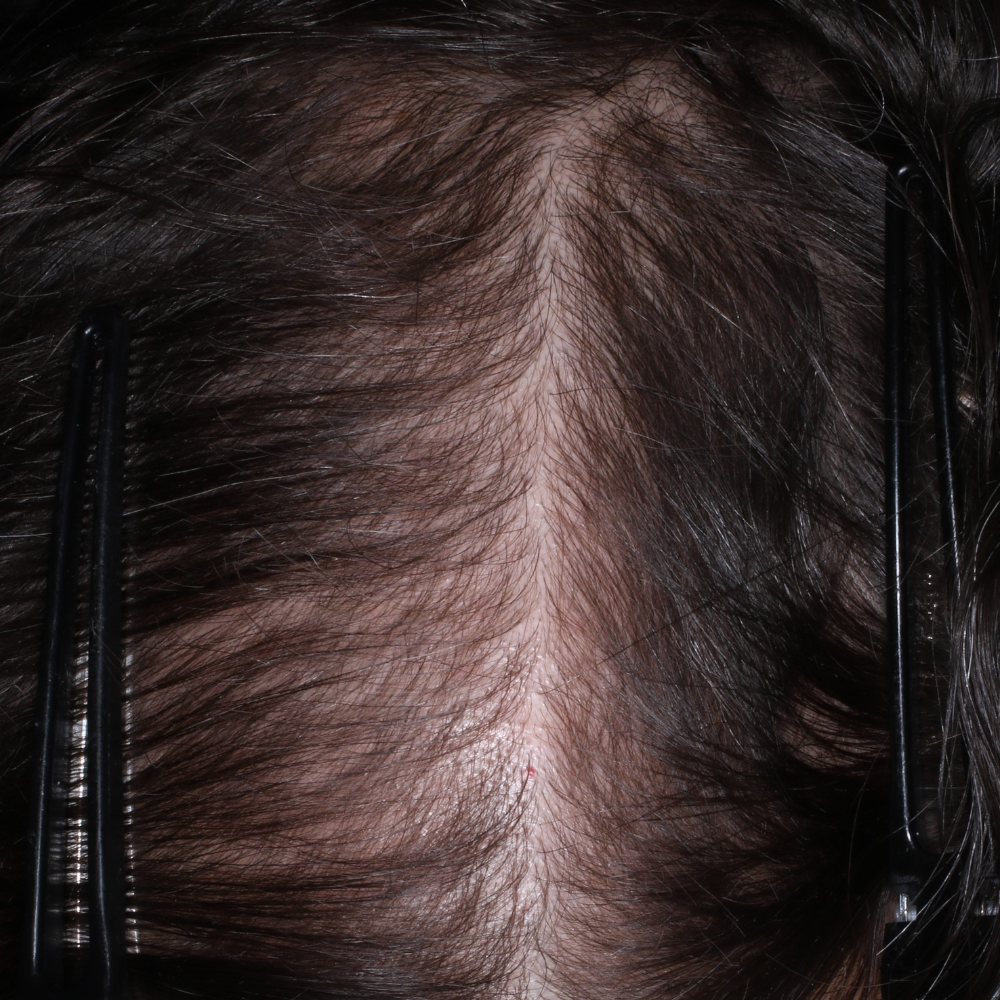
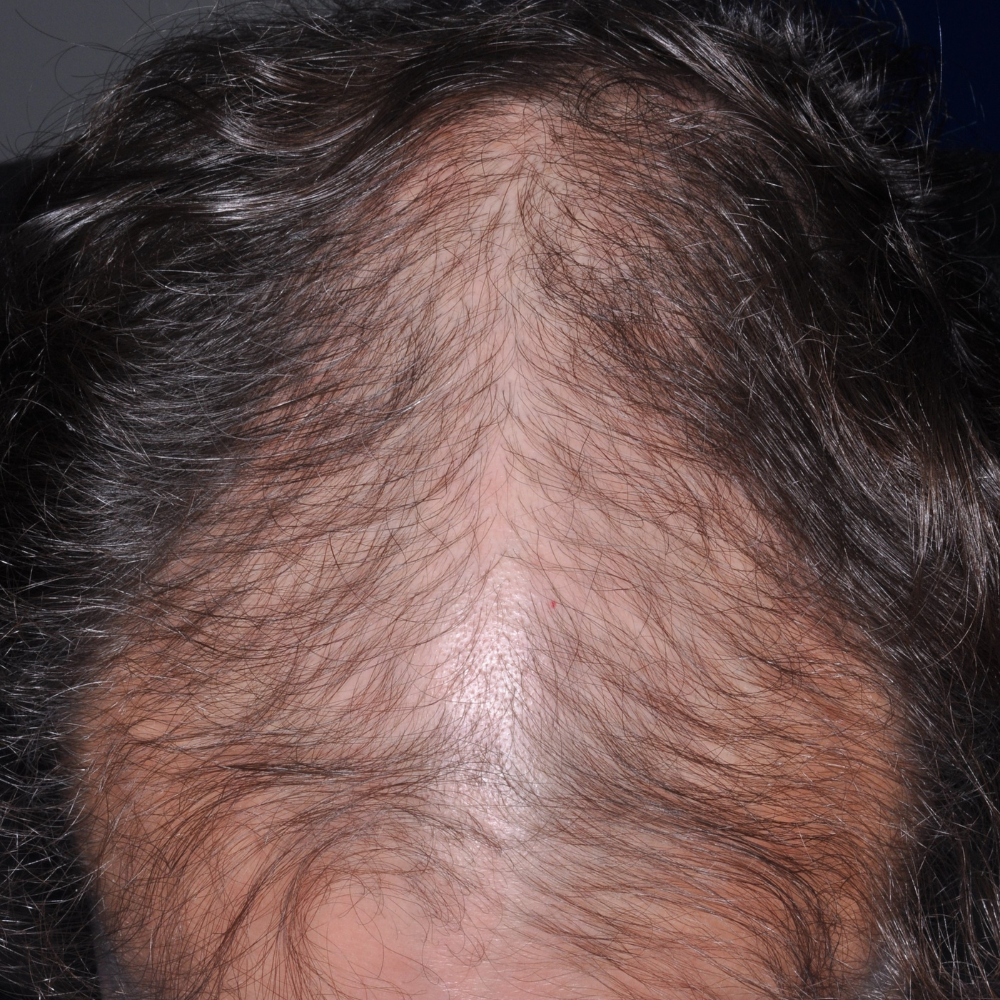
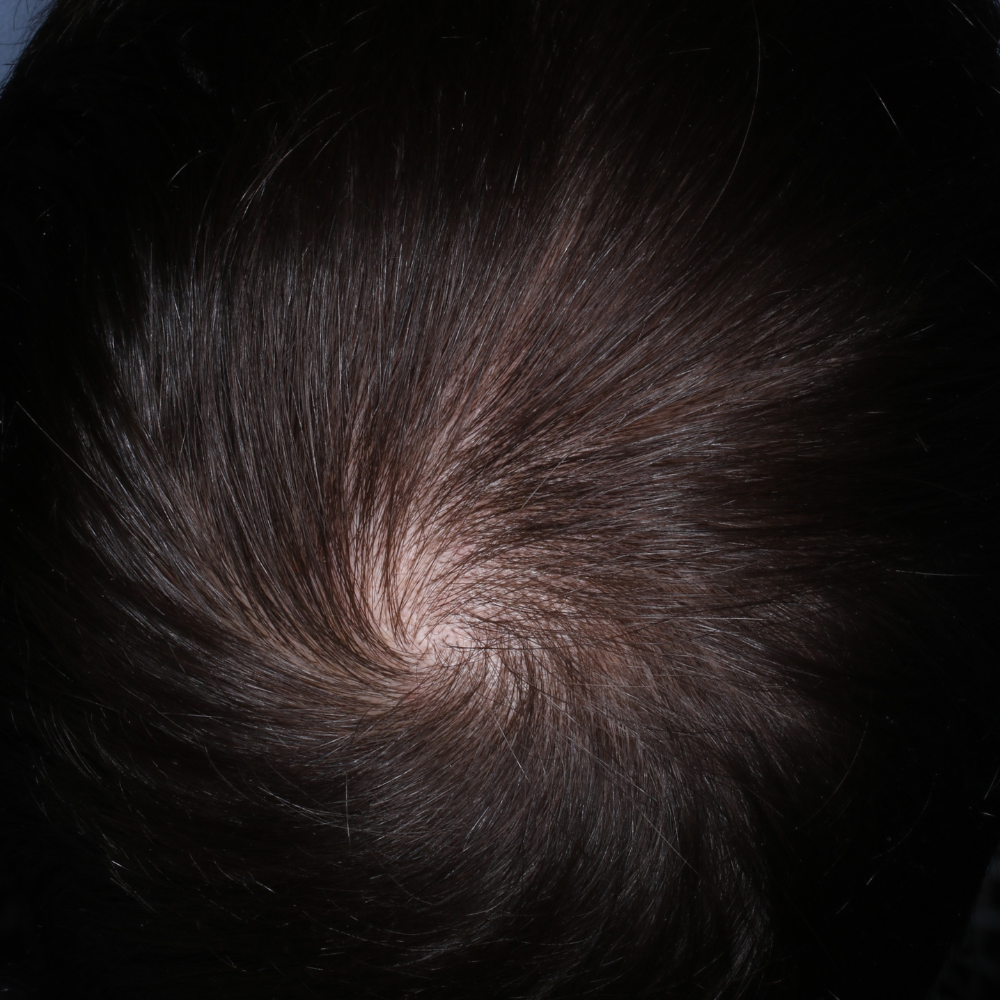
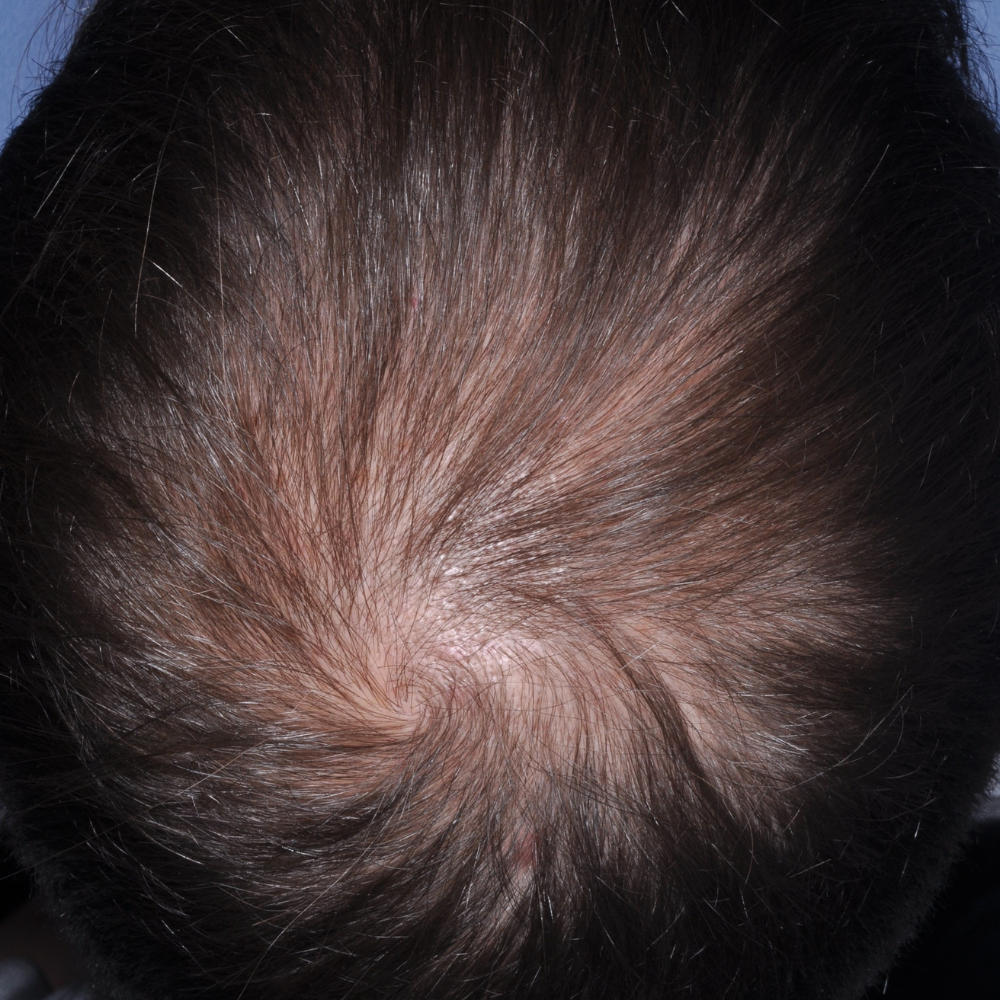
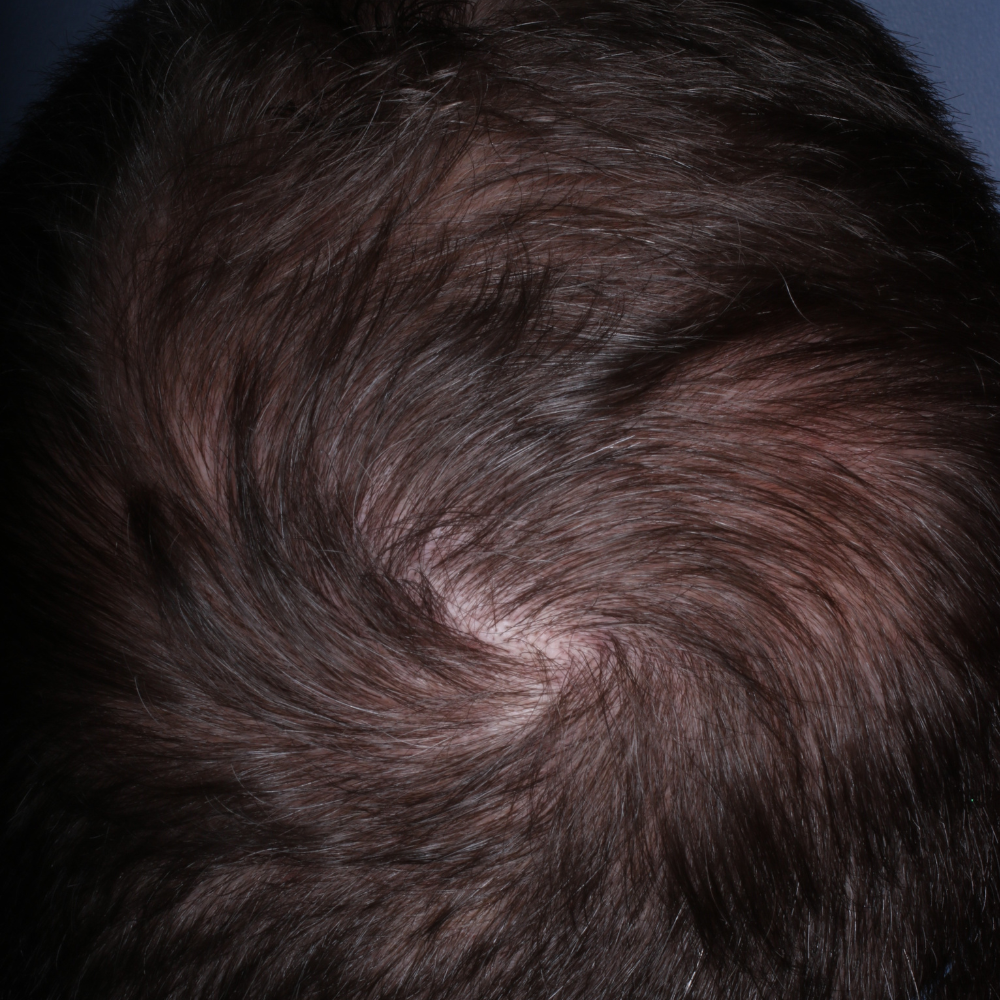
Alopecia areata is a common cause of non-scarring hair loss which can occur at any age. It
usually causes circular patches of baldness on the scalp but can affect other hair-bearing
areas e.g., beard, eyebrows and eyelashes. Some patients can develop more extensive hair
loss occasionally resulting in alopecia totalis (involving the entire scalp) or alopecia
universalis (involving the entire body). Most patients with a few small patches of alopecia
areata will regrow all their hair within a year. If more than half the hair is lost, the
probability of a full recovery is low. Most patients will experience further episodes of alopecia
areata.
What causes alopecia areata?
In alopecia areata, hair loss occurs due to inflammation targeting the hair bulb. The immune
system, the natural defence system which normally protects the body from infections and
other diseases, attacks the growing hair. The underlying trigger for this immune attack is
unknown. There is a genetic predisposition to alopecia areata, with approximately 20% of
patients reporting a positive family history.
There is no evidence to suggest an association between alopecia areata and diet or vitamin
deficiencies. Stress occasionally appears to be a trigger for alopecia areata, but it is possible
that this link may be coincidental as many affected patients have no significant stress.
What are the symptoms and signs of alopecia areata?
Alopecia areata is usually asymptomatic. Typically, it starts as one or more bald patches on the scalp. It tends to affect pigmented hair so there may be residual white hairs within the bald spots in older patients. Some patients with alopecia areata develop small depressions in their nails.
How is alopecia areata treated?
The treatment of alopecia areata may include:
Topical corticosteroids
Topical tofacitinib
Corticosteroid injections
Systemic immunosuppressants e.g., ciclosporin
Oral Janus kinase inhibitors e.g., tofacitinib and baricitinib