
Discoid Lupus Erythematosus
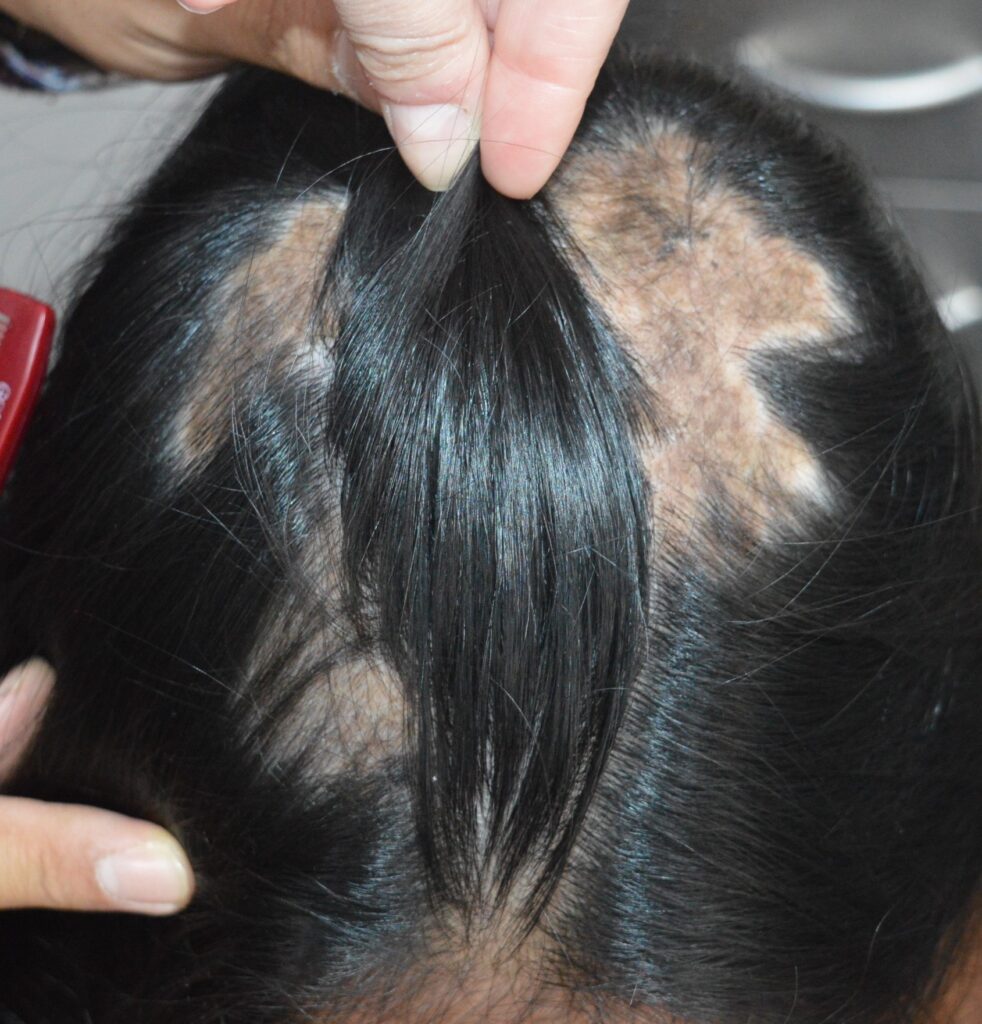
The term ‘lupus erythematosus’ refers to a group of related disorders. ‘Discoid’ lupus erythematosus (DLE) is a form of lupus erythematosus which is confined to the skin. It is characterised by localised red or pink scaly patches most often on the head and neck, including the scalp. Uncontrolled inflammation may lead to permanent damage to the skin and hair follicles resulting in irreversible hair loss.
What causes discoid lupus erythematosus?
The cause of DLE is not fully understood but it is thought to be an autoimmune disease.
Factors which may increase the risk of DLE or exacerbate it include sun exposure, stress,
infection and smoking.

The term ‘lupus erythematosus’ refers to a group of related disorders. ‘Discoid’ lupus erythematosus (DLE) is a form of lupus erythematosus which is confined to the skin. It is characterised by localised red or pink scaly patches most often on the head and neck, including the scalp. Uncontrolled inflammation may lead to permanent damage to the skin and hair follicles resulting in irreversible hair loss.
What causes discoid lupus erythematosus?
The cause of DLE is not fully understood but is thought to be an autoimmune disease. Factors which may increase the risk of DLE or exacerbate it include sun exposure, stress, infection and smoking.
What are the symptoms and signs of discoid lupus erythematosus?
Discoid lupus erythematosus may be associated with symptoms such as itching, pain or burning. Any part of the scalp may be affected.
What are the symptoms and signs of discoid lupus erythematosus?
Discoid lupus erythematosus may be associated with symptoms such as itching, pain or
burning. Any part of the scalp may be affected. Discoid lupus erythematosus can also affect
other parts of the body, especially areas which are exposed to the sun.The inflammation in DLE causes redness and scaling of the skin around the hair follicle
opening. Destruction of hair follicles in DLE results in irreversible hair loss along with
pigmentary changes.
How is discoid lupus erythematosus be diagnosed?
Discoid lupus erythematosus can often be recognised by its characteristic appearance and
distribution. However, if the diagnosis is uncertain, a biopsy may be performed. A blood test
is necessary to exclude concomitant systemic lupus erythematosus.
How is discoid lupus erythematosus treated?
The treatment of DLE may include:
- Sun protection
- Topical, intralesional or oral corticosteroids
- Topical calcineurin inhibitors
- Antimalarial drugs e.g., hydroxychloroquine
- Dapsone
- Thalidomide
- Systemic immunosuppressants e.g., ciclosporin and methotrexate
- Janus kinase inhibitors e.g., tofacitinib and baricitinib

DLE Before
