
Fibrosing Alopecia in a Pattern Distribution
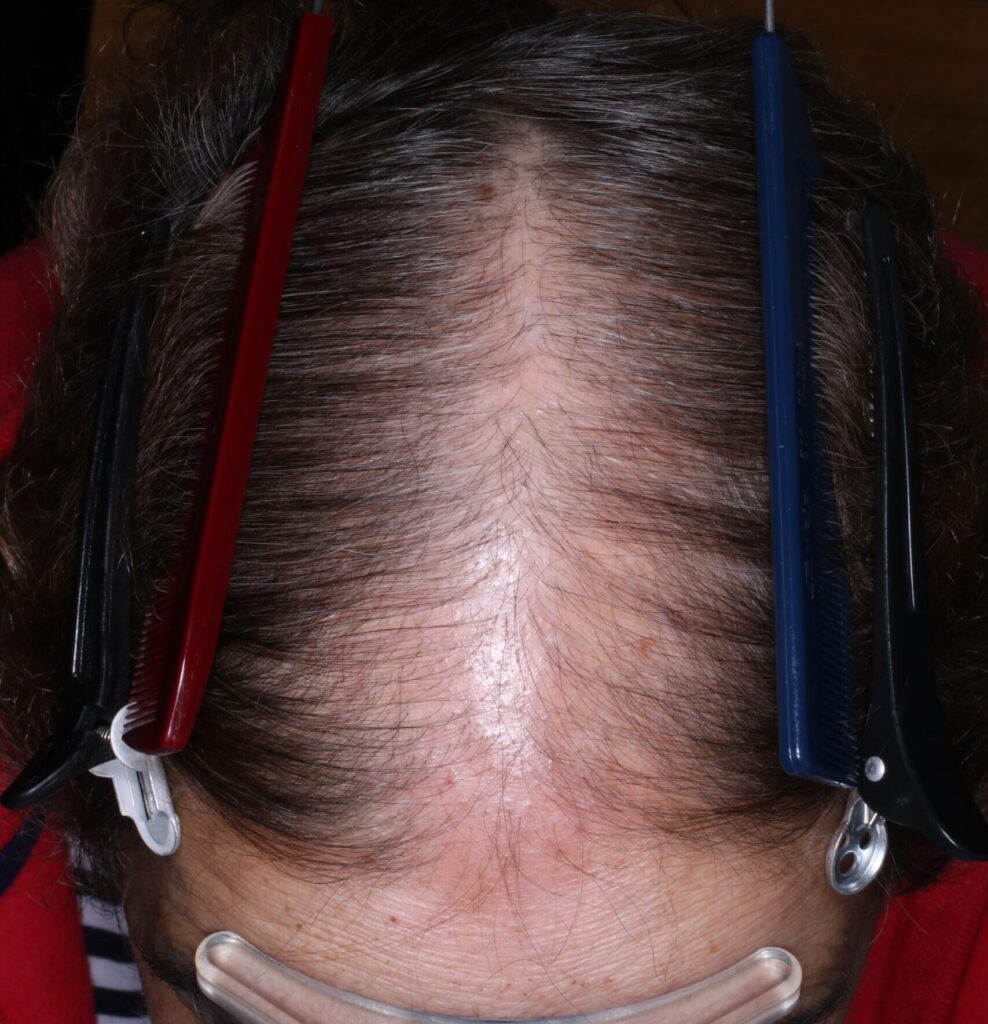
Fibrosing alopecia in a pattern distribution (FAPD) is a rare condition which causes permanent hair loss on the central scalp in a pattern similar to androgenetic alopecia. Fibrosing alopecia in a pattern distribution is common in postmenopausal women although it can also affect younger women and men.
What causes fibrosing alopecia in a pattern distribution?
The cause of FAPD is unknown. It has been hypothesised that it represents an exaggerated inflammatory response to hair follicle miniaturisation (the gradual shrinking of hair follicles).
What are the symptoms and signs of fibrosing alopecia in a pattern distribution?
Fibrosing alopecia in a pattern distribution is often asymptomatic but, in some cases, may
be associated with itching, pain or burning. These symptoms are often mild.
The hair loss in FAPD affects the 'androgen-dependent' areas of the scalp i.e., areas of the scalp in which hair follicles are sensitive to sex hormones. The inflammation in FAPD may cause redness and scaling of the skin around the hair follicle opening. However, these signs can be subtle. Destruction of hair follicles in FAPD results in irreversible hair loss.
How is fibrosing alopecia in a pattern distribution diagnosed?
The diagnosis of FAPD usually requires a biopsy.
How is fibrosing alopecia in a pattern distribution treated?
The treatment of FAPD is challenging but may include:
- Topical or intralesional corticosteroids
- Topical minoxidil
- Low-dose oral minoxidil
- Antimalarial drugs e.g., hydroxychloroquine
- Oral anti-androgen therapy e.g., finasteride and dutasteride