
Folliculitis Decalvans
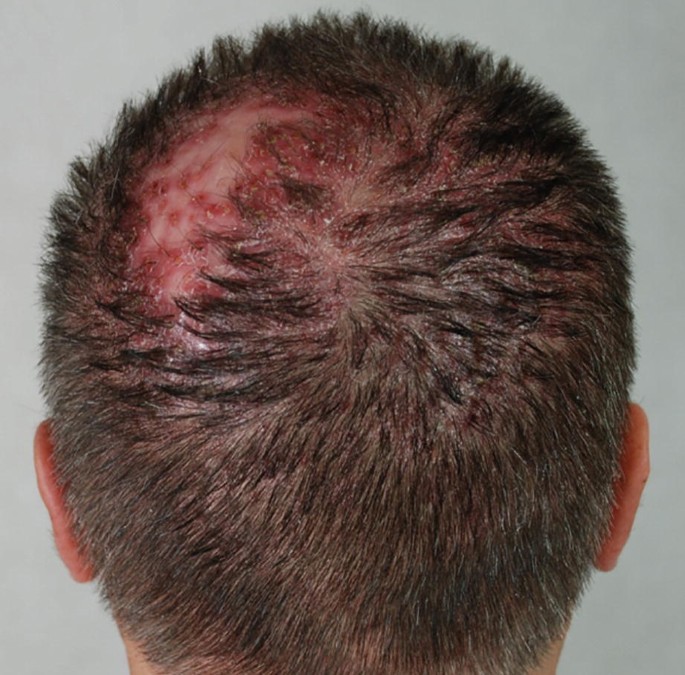
Folliculitis decalvans is a rare chronic inflammatory condition of the scalp. The prolonged inflammation in folliculitis decalvans causes destruction of the hair follicle and replacement with scarring, resulting in permanent hair loss. Folliculitis decalvans is much more common in men.
What causes folliculitis decalvans?
The exact cause of folliculitis decalvans is unknown but it may be due to an abnormal
reaction to a bacterium called Staphylococcus aureus.
What are the symptoms and signs of folliculitis decalvans?
Folliculitis decalvans is often associated with symptoms such as itching, pain or burning. It usually affects the scalp vertex.
The affected area is usually red and swollen with associated pus-filled spots and crusts. A characteristic feature is the emergence of several hair shafts from the same opening in the skin, also known as tufting. Destruction of hair follicles in folliculitis decalvans results in irreversible hair loss.
How is folliculitis decalvans diagnosed?
Folliculitis decalvans can often be recognised by its characteristic appearance and distribution. However, if the diagnosis is uncertain, a biopsy may be performed. A swab from an intact pus-filled spot is usually microscopically examined for the presence of Staphylococcus aureus.
How is folliculitis decalvans treated?
The treatment of folliculitis decalvans may include:
- Topical or intralesional corticosteroids
- Topical antibiotics e.g., clindamycin
- Oral antibiotics e.g., doxycycline
- Dapsone
- Isotretinoin