
Eczema
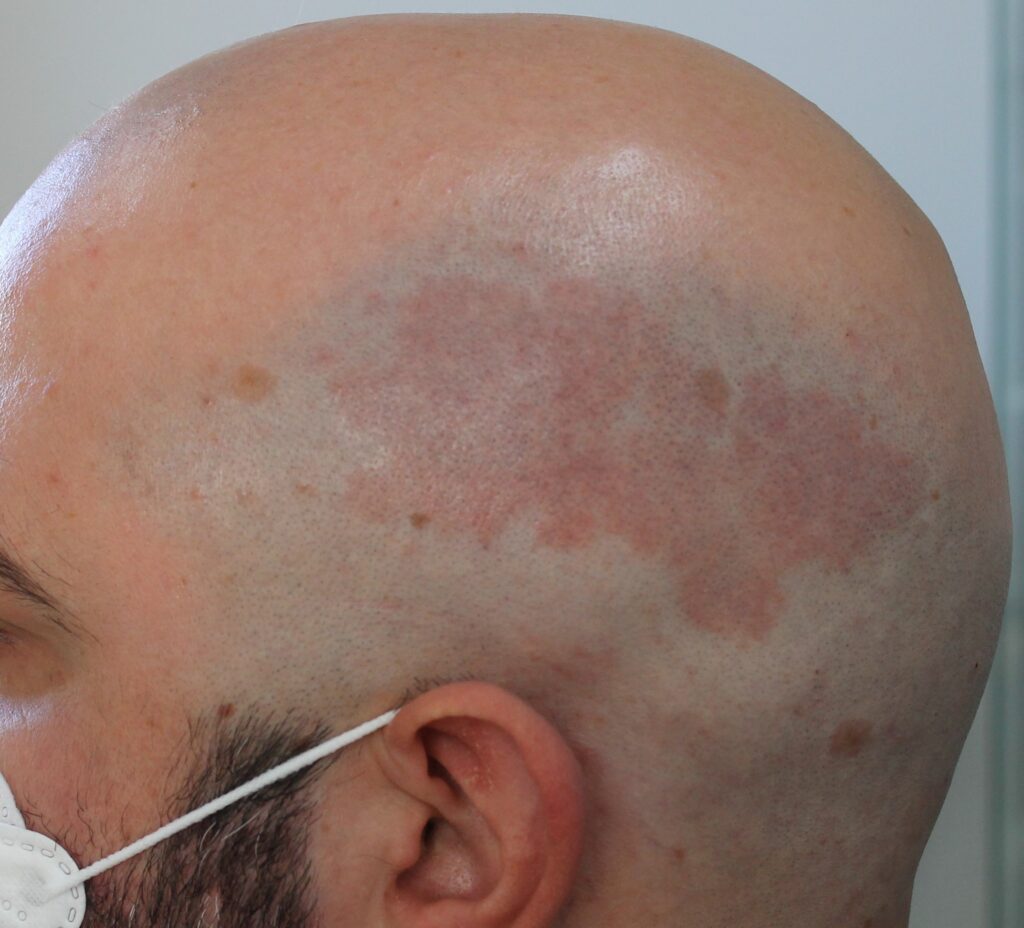
The scalp is an area which can be affected by several types of eczema. The scalp may be dry, itchy and scaly in a chronic phase and inflamed (red), weepy and painful in an acute phase.
What are the types of eczema which can affect the scalp?
Seborrhoeic eczema (dermatitis) is one of the most common types of eczema seen on the
scalp and hairline. It can affect babies (cradle cap), children and adults. The skin appears red
and scaly and there is often associated dandruff. There may also be a rash on parts of the
face, such as the eyebrows, eyelids and nasolabial folds.
Atopic eczema is a common type of eczema which can involve the scalp. The skin is red, dry and itchy and can become infected, especially if scratched and if there is broken skin.
Allergic contact dermatitis can develop as a result of a cutaneous allergy. Common items which can cause allergic contact dermatitis on the scalp include:
- Hair products e.g., shampoos, conditioners, gels and sprays
- Hair dyes
- Bathing caps and hair nets, especially those containing rubber
- Hair clips and headgear, especially those containing rubber or nickel
Irritant contact dermatitis is a type of eczema which occurs when the skin surface is irritated by a substance which causes the skin to become dry, red and itchy. For example, shampoos, mousses, hair gels, hair spray, hair bleach and fragrances can all cause irritant contact dermatitis.
How is scalp eczema diagnosed?
Scalp eczema is a clinical diagnosis; in other words, it can be recognised by its characteristic
appearance and distribution. If a cutaneous allergy is suspected, patch testing is indicated.
How is scalp eczema treated?
Treatments for seborrhoeic eczema include:
- Medicated shampoos containing ketoconazole, selenium, zinc pyrithione, coal tar and salicylic acid
- Topical corticosteroids
- Topical calcineurin inhibitors
Treatments for atopic, allergic contact and irritant eczema affecting the scalp include:
- Regular emollients e.g., creams and spray-on oils
- Avoidance of allergens or irritants
- Topical corticosteroids
- Topical calcineurin inhibitors
In the case of atopic eczema with associated severe body involvement, other treatments may include:
- Phototherapy (although this may be difficult on the scalp)
- Systemic immunosuppressants e.g., azathioprine, ciclosporin and methotrexate
- Janus kinase inhibitors e.g., upadacitinib
- Biologics e.g., dupilumab