Platelet-Rich Plasma
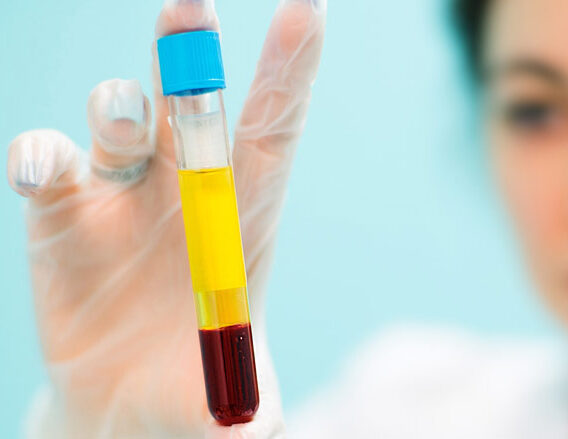
Platelets are one of four primary components of blood (the other three are red blood cells, white blood cells and plasma). Platelets promote cell growth and regeneration. As the term “platelet-rich plasma (PRP)” suggests, platelets are generally about five times more concentrated in PRP than in regular blood. Platelets secrete growth factors which are thought to assist in wound healing and tissue regrowth.
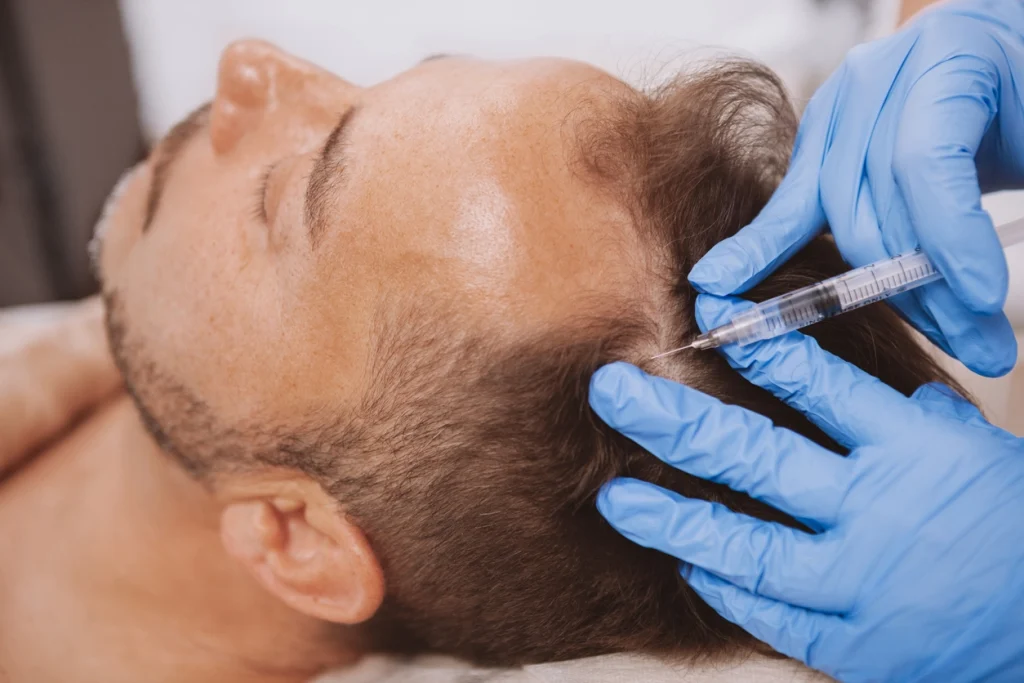
The theoretical basis for its use in hair loss is that platelets injected deep into the scalp to reach the base of the hair follicle may stimulate a specialized population of cells (dermal papilla cells), which play an essential role in hair growth and cycling.
Most conventional PRP preparations involve drawing blood from the patient, placing it into a centrifuge and drawing the platelet concentrate into a syringe for the treatment. Platelet- rich plasma is then injected into areas of hair loss. The usual regimen involves three sessions, one month apart, followed by maintenance sessions every 3-6 months.
Platelet-rich plasma injections are considered safe when performed by a trained medical practitioner. Mild risks include pain, redness, headache and transient hair shedding.
Platelets are one of four primary components of blood (the other three are red blood cells, white blood cells and plasma). Platelets promote cell growth and regeneration. As the term “platelet-rich plasma (PRP)” suggests, platelets are generally about five times more concentrated in PRP than in regular blood. This concentration is helpful, because platelets secrete growth factors than are thought to assist in wound healing and tissue regrowth.